

Technology
Samsung Galaxy Z Fold 9 Search Spike in the US
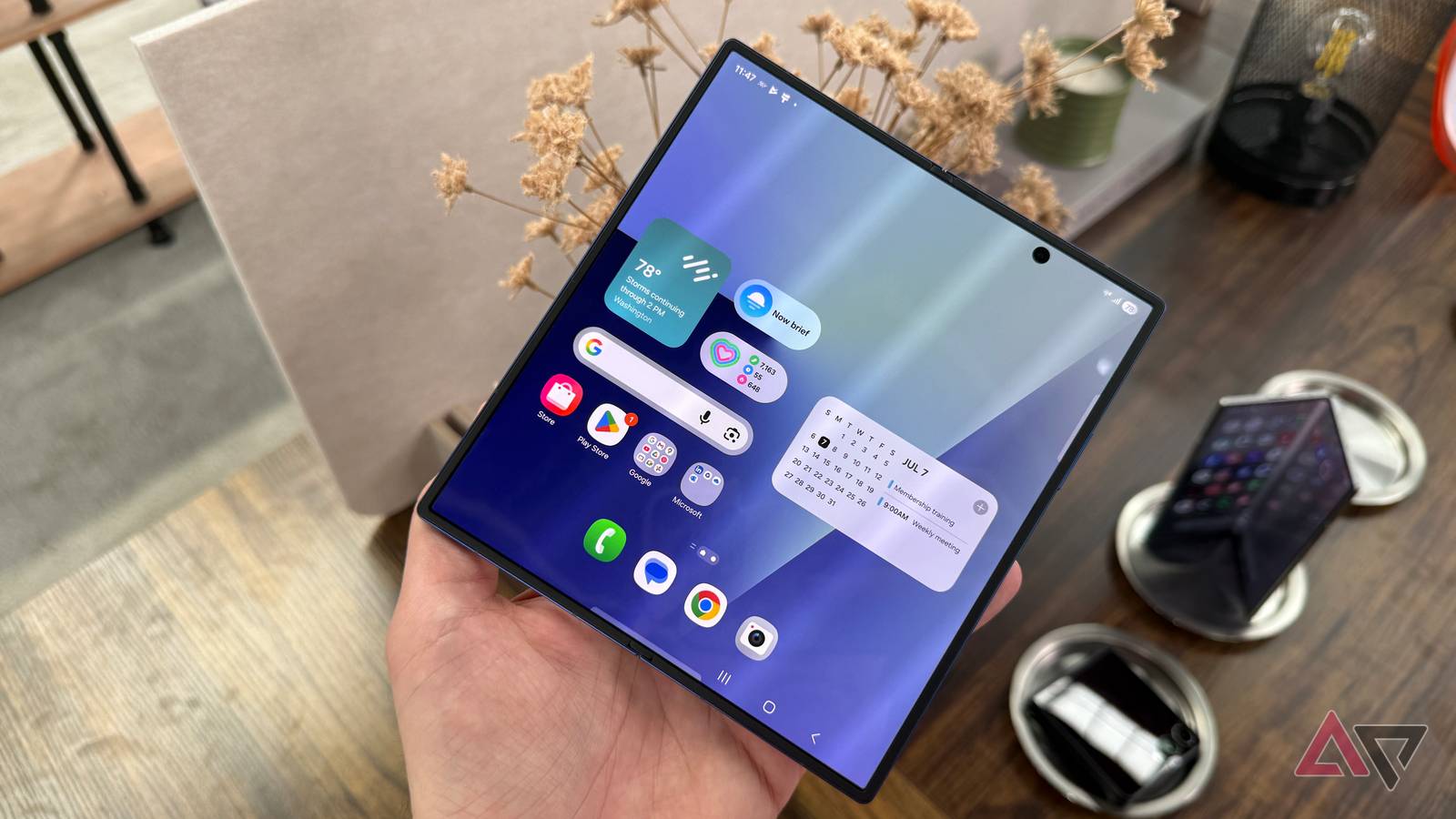
A foldable phone is back on the map
Search interest in the Samsung Galaxy Z Fold 9 has suddenly become a lot louder in the United States. The trend data, pulled from serpapi and fetched on 2026-10-04 at 11:00:15, shows a search volume above 2,000 and a 200% increase. That is not the kind of number you see for a quiet product note. It is the kind of spike that usually means a story has moved from the margins into the main feed.
More importantly, the trend is tagged with AI. That label matters because it tells us the conversation is not only about hardware. People are not just asking whether the phone looks cool or whether the hinge is better. They are asking what the device can do for them, how it handles personal tasks, and whether Samsung is finally making a foldable that feels less like a novelty and more like a useful tool.
Of course, a search spike is not a product review. It is a pulse check. But when a foldable phone, a major brand, and an AI theme all land in the same trend bucket, it becomes worth unpacking. The question is not simply whether the Z Fold 9 is good. The bigger question is what this moment says about the next phase of foldable phones.
Why the Z Fold 9 is drawing attention now
Foldable phones have been around long enough that the first wave of excitement has worn off. Early adopters bought them, reviewers tested them, and the market learned which features were genuinely useful and which were mostly marketing. So when a new Samsung foldable starts pulling attention again, it usually means something has shifted in the story.
In this case, the shift appears to be tied to AI. The trend label points to that directly, and it fits the broader pattern we have seen across smartphones over the past year. Users are no longer satisfied with a phone that simply takes photos and scrolls feeds. They want a device that can summarize, organize, draft, translate, and anticipate. That is where a foldable becomes interesting, because the larger canvas gives AI more room to work.
There is also the timing element. A 200% jump in search interest does not happen in a vacuum. It can be fueled by a leak, a teaser, a retailer listing, a social video, or a wave of commentary. The data does not tell us which trigger started it, but it does tell us that the conversation has become visible enough to matter.
From a newsroom perspective, that is the key point. This is not just a niche rumor thread. It is a consumer technology story with enough momentum to shape expectations for Samsung’s next foldable generation.
The AI angle is doing the heavy lifting
The most useful way to read this trend is through the AI label. If the Samsung Galaxy Z Fold 9 were trending only because of a new hinge or a thinner body, the story would be familiar. But AI changes the framing. It turns the phone from a hardware object into a service layer: something that can help with work, travel, health, shopping, and communication without the user having to jump between five apps.
That matters for foldables in particular. A large unfolded screen can show more context at once. It can display a document on one side, a chat on the other, and an AI-generated summary in a panel. It can turn a phone into a mini work surface, a travel planner, or a personal dashboard. The more capable the AI becomes, the more valuable that extra screen real estate becomes.
US users are especially likely to care about this because the American market has always been a testing ground for productivity-heavy phone use. Business travelers, creators, students, and remote workers all look for devices that can compress tasks. If Samsung can position the Z Fold 9 as an AI-first foldable, it is not just selling a phone. It is selling a workflow.
The risk, of course, is that the AI promise outpaces the delivery. If the features feel gimmicky, slow, or too dependent on cloud services, the hype can turn quickly into skepticism. But the fact that AI is attached to the trend suggests that the conversation has already moved beyond basic specs.
What a 200% jump usually means
A 200% increase in search interest is a strong signal, but it is not the same as a sales figure. Search spikes can be created by a single viral post, a news article, a comparison video, or a burst of speculation. They measure attention, not purchase intent. Still, in consumer technology, attention often precedes buying decisions, especially when the product is expensive and the decision is delayed.
In the US, that pattern is common. People research phones for weeks before committing. They compare battery life, camera samples, software updates, repair costs, and carrier deals. A foldable phone is even more research-heavy because it is a bigger commitment. The user has to ask whether the form factor fits their daily life, whether apps are optimized, and whether the device will remain useful after a year.
The serpapi data gives us the shape of that attention: more than 2,000 searches and a 200% increase. It does not tell us where those searches came from, whether they were driven by official Samsung material or by third-party commentary, or whether they will convert into preorders. That is where the analysis has to stay careful.
What we can say is that the threshold for public curiosity has been crossed. A trend like this is no longer just a whisper among gadget fans. It is visible enough to influence how competitors, retailers, and analysts talk about the category.
The foldable format is still a niche experiment
Despite the excitement, foldable phones remain a smaller slice of the smartphone market than slab phones. That reality matters. A large search spike can make the category feel bigger than it is, and that is why the analysis should stay grounded. The Z Fold 9 may be generating strong interest, but the format still has to prove that it works for a wider audience.
The core tension has not changed. Foldables offer a larger screen in a compact package, which is appealing for reading, maps, video, and multitasking. But they also carry trade-offs: a more complex hinge, a different repair profile, a heavier device, and a software experience that still has to feel as natural as a regular phone. If the user has to think about the fold, the form factor has not won.
Samsung has spent years trying to smooth that curve. The Z Fold line has improved in durability, software polish, and app support, but the category still lives in a delicate balance between innovation and practicality. That is why the AI angle is so important. It gives the foldable a reason to exist beyond novelty. It suggests that the extra screen can actually do something useful every day.
If the Z Fold 9 can make that case, it may not just be another refresh. It could be the version that pushes foldables from early-adopter territory into mainstream consideration.
Samsung’s challenge is making the fold feel essential
The hardest part of selling a foldable is not showing it off. It is convincing people that they need it. A slab phone is familiar. It fits in a pocket, it works with existing habits, and it is easy to repair. A foldable asks the user to change how they hold, open, and rely on the device. That is a big ask, especially at the premium end of the market.
For the Z Fold 9, the answer likely has to come from software. Hardware can get thinner, lighter, and stronger, but the real differentiator will be how the phone behaves when it is open. Can it turn a commute into a planning session? Can it make a meeting easier to manage? Can it help someone draft a message, summarize a document, or organize a trip without feeling like a demo?
This is where the AI label becomes more than a marketing tag. It points to a shift in expectations. Users are not just looking for a bigger screen. They are looking for a smarter companion. If Samsung can make the Z Fold 9 feel like a personal assistant that happens to be a phone, the device could stand out in a crowded category.
The bar, however, is high. A foldable that is merely impressive is not enough. It has to be useful. It has to earn the extra attention, the extra cost, and the extra care that comes with a more complex device.
Competitors are raising the bar
Samsung does not have this conversation to itself. The foldable market has become more competitive, and the broader smartphone industry is moving in the same direction: more AI, more personalization, and more emphasis on productivity. That means the Z Fold 9 has to win not just against previous Samsung models, but against a wider set of devices that can do some of the same jobs.
Tablets, laptops, and even ordinary flagship phones are all competing for the same user time. If a person can finish a task on a laptop or a tablet, why switch to a foldable? The answer has to be convenience, portability, and a seamless experience. The Z Fold 9 will need to make the case that its unique form factor is not just a different shape, but a better way to get things done.
That competition also raises the stakes for software. If AI features are too similar across brands, the hardware differences become more important. If the AI is too generic, the foldable loses its reason to exist. Samsung will need to show that the Z Fold 9 is not just another phone with a new label, but a device that uses its size in a way no slab phone can.
In other words, the trend is not just about Samsung. It is about the entire category trying to justify itself in a market where AI is becoming the new battleground.
What buyers are likely to ask next
Once the initial curiosity fades, the conversation will move to practical questions. Buyers will want to know how the Z Fold 9 handles battery life, heat, durability, and everyday reliability. They will ask whether the display still shows a visible crease, whether the hinge feels solid, and whether the device is light enough to carry all day.
Software questions will matter just as much. Will the AI features work offline? Will they respect privacy? Will the phone get meaningful updates for years? Will third-party apps finally take advantage of the larger screen? These are the details that separate a good launch from a lasting product.
Price will also be a factor. Foldable phones have always sat at the top of the market, and that puts them in a difficult position. They have to justify a premium price with a premium experience. If the Z Fold 9 is positioned as an AI device, the expectation will be that it does more, not just looks different.
The search spike tells us that people are asking these questions now. The next few weeks will show whether the answers are good enough to turn curiosity into confidence.
Why the US market matters
The United States is one of the most important markets for Samsung, and it is also one of the best places to see how a new phone will perform globally. American consumers are early adopters, they are vocal, and they are used to comparing devices across carriers, retailers, and social platforms. A spike in US search interest can therefore be a leading indicator for wider adoption.
The AI theme also fits the US market well. American users are accustomed to productivity tools, cloud services, and personal assistants. They are more likely to experiment with new software features and to share their experiences online. That makes the US a useful testing ground for how the Z Fold 9’s AI capabilities will be received.
There is also a cultural factor. The US market rewards novelty, but it punishes overpromising quickly. If the Z Fold 9 is marketed as an AI breakthrough and then delivers only incremental improvements, the backlash can be swift. If it delivers a genuinely useful experience, the word of mouth can be just as powerful.
That is why the 2,000+ search volume and 200% increase are worth watching. They are not just numbers. They are a signal that the US conversation has started, and that conversation will shape how the rest of the world talks about the device.
What to watch before calling it a breakout moment
For all the excitement, the next step is to stay cautious. A search spike is a beginning, not an ending. It tells us that attention has been captured, but it does not yet tell us whether the product will live up to the attention. The real test will come with official details, hands-on reviews, and early user feedback.
Watch for how Samsung frames the Z Fold 9. If the messaging is mostly about AI, the company is betting on software as the differentiator. If the messaging is mostly about design, the company is betting on hardware. Both can work, but the balance will matter. A foldable that is only good at one thing will struggle to justify its price.
Also watch the competitive response. If rivals start emphasizing their own AI features, the category will become more crowded. If retailers begin offering early deals, that may signal confidence in demand. If the search interest fades quickly, the spike may have been a short-term curiosity rather than a durable shift.
At this point, the Samsung Galaxy Z Fold 9 is a trend, not a verdict. But it is a trend with enough momentum to matter. The next few weeks will show whether this is just another foldable refresh or the start of a new era for the category.