

News
The Tragic Silence After the Chatsworth Crash: Eliana Moreno and the NBC News Helicopter Incident
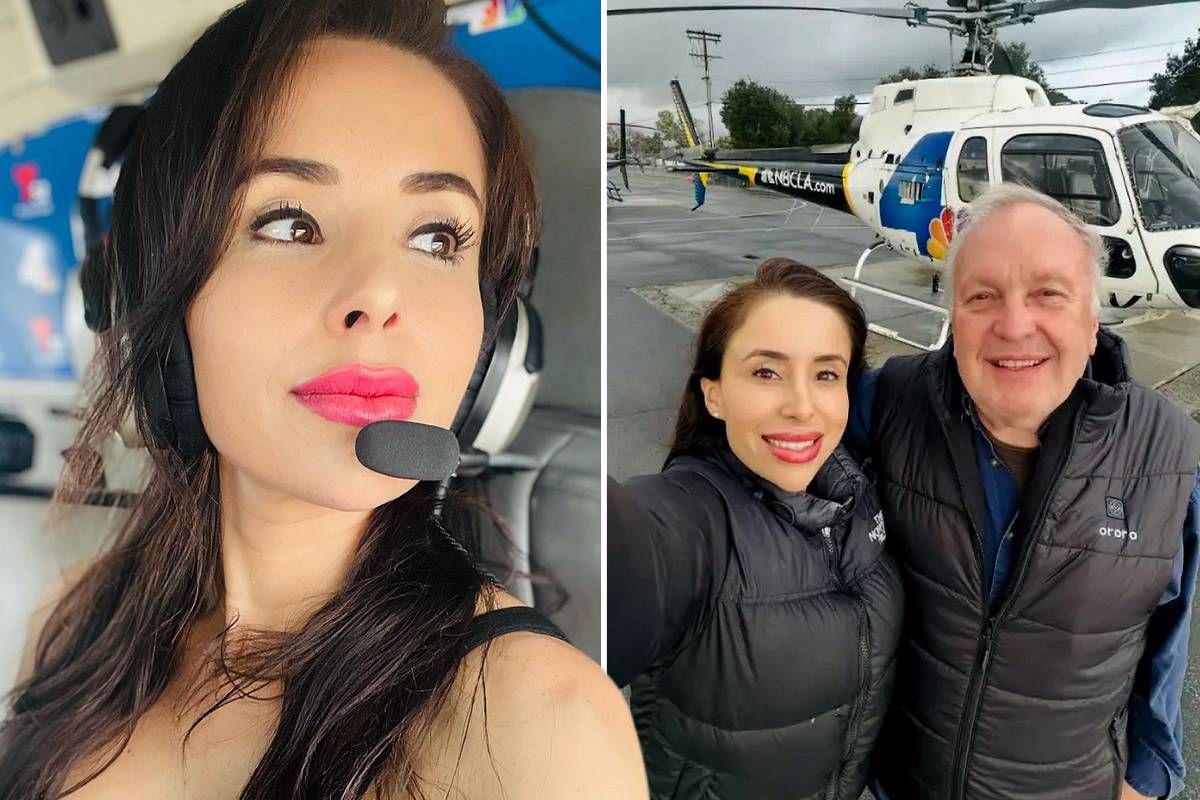
A Moment of Shock in Los Angeles
The air over Chatsworth was thick with dust and silence, a stark contrast to the usual hum of activity that defines this part of the San Fernando Valley. What began as a routine news gathering mission quickly turned into a national tragedy, sending shockwaves through the media community and the families of those involved. The incident, which has now triggered a massive spike in public interest, is being reported as a fatal helicopter crash involving a KNBC aircraft.
In the span of mere minutes, the narrative of a standard afternoon broadcast shifted into something far darker. For many, the name Eliana Moreno has become synonymous with the human cost of chasing the story. While specific details regarding her exact role at the moment of impact remain under investigation, the sheer volume of searches—surpassing 100,000 in a single day—suggests a deep emotional connection between the public and the individuals lost in the sky.
This isn't just a statistic; it's a story of lives interrupted. As the sun set over the hills of Chatsworth, the community was left mourning not just a loss of life, but the sudden absence of voices that had chronicled their world for decades.
The Surge in Public Attention
It is rare for a local news event to capture the collective consciousness of an entire country so violently. Yet, the data tells a compelling story of our modern information landscape. According to recent trend analysis from Serpapi, the search term 'Eliana Moreno' has seen an astronomical increase of 1,000%. This isn't merely curiosity; it is a desperate attempt to understand what happened, who was there, and why the outcome was so catastrophic.
When you look at the related rising queries, the pattern becomes clear. People aren't just searching for the name; they are searching for context. Terms like 'helicopter crash', 'Chatsworth', and 'NBC helicopter crash' have exploded alongside the individual's name. It suggests a populace trying to piece together the puzzle of a tragedy that feels both distant and intimately close.
The volume of traffic, exceeding 100,000 views in a very short window, indicates a breaking news cycle that refuses to fade. In an era where headlines can be fleeting, this level of sustained attention speaks to the gravity of the situation. It highlights how quickly a tragic event can transform a local reporter or pilot into a household name, even if only for a few days.
The Role of Broadcast Aviation
To understand the magnitude of this event, one must look at the unique environment of broadcast journalism. News helicopters are often the eyes of the media, providing live coverage of everything from wildfires to traffic jams. However, they operate in some of the most congested airspace in the world, particularly around Los Angeles. The proximity to major highways and residential areas creates a high-stakes scenario where margins for error are non-existent.
The mention of 'news chopper 4' and 'KNBC' in search trends points to the specific brand identity of the station involved. These organizations carry a weight of trust with their viewers. When a vehicle associated with them falls from the sky, it shakes the foundation of that trust. The public expects these crews to return safely, a promise that is broken in moments like these.
We must also consider the pressure cooker atmosphere of live reporting. The drive to get the first shot, the exclusive angle, or the real-time update can sometimes cloud judgment. While we cannot speculate on the operational decisions made on that fateful flight, the industry is forced to confront whether the current protocols are sufficient for the risks being taken.
Community Grief and Solidarity
Beyond the statistics and the technical inquiries, there is a profound sense of grief rippling through the Chatsworth neighborhood. Residents who watched the news every morning on their televisions are now looking up at the sky with fear and sadness. The idea that the very machines meant to inform them could become sources of danger is a bitter pill to swallow.
Families and friends of those involved are navigating a nightmare scenario. The sudden nature of the crash leaves little room for closure or preparation. In the immediate aftermath, social media platforms have been flooded with messages of support, prayers, and confusion. The hashtag #ElianaMoreno has likely become a focal point for this digital mourning, connecting strangers in shared sorrow.
The community is rallying, as communities do in times of crisis. Local businesses may offer space for vigils, while neighbors check in on one another. This solidarity is a testament to the bonds forged in a place where everyone knows each other's faces, even if they don't know their names.
Investigation and Accountability
Now, the focus shifts from emotion to facts. Authorities are expected to launch a thorough investigation into the cause of the accident. Questions will be asked about weather conditions, mechanical integrity, and pilot experience. The involvement of 'NBC News' and 'KNBC' means that regulatory bodies will be watching closely to ensure transparency.
The phrase 'after the crash' appears frequently in search data, signaling a desire for updates on the inquiry. People want to know if there were warning signs, if maintenance logs were up to date, and if any procedural errors occurred. This scrutiny is necessary to prevent future tragedies and to honor the memory of those lost by ensuring lessons are learned.
Accountability is a heavy burden, but it is essential. Whether the findings point to human error, mechanical failure, or environmental factors, the truth must come to light. Only then can the industry begin to heal and adapt its practices to better protect the brave souls who fly into harm's way to bring us the news.
The Human Cost of Information
Eliana Moreno's name has become a symbol of the sacrifices made in the pursuit of information. Journalism is often described as the fourth estate, a pillar of democracy, but it relies on human beings to stand in the trenches. Those pilots and reporters take immense risks every day, often without the full recognition of the public until it is too late.
This tragedy forces us to reconsider the value we place on the news. We consume it voraciously, demanding instant access to every developing story. But we rarely stop to think about the physical toll this demand takes on the people delivering it. The 1,000% increase in search traffic is a double-edged sword: it shows we care, but it also underscores how easily we overlook the dangers inherent in the job.
We must remember that behind every headline, every live feed, and every breaking alert, there is a person. A person with a family, a home, and a future. When that future is cut short, the ripple effects are felt far beyond the newsroom.
Looking Ahead: Safety and Reform
As the dust settles, the question remains: what changes will come from this? The aviation industry is notoriously conservative when it comes to safety regulations, but major incidents often force rapid evolution. We may see stricter guidelines on flight paths, mandatory rest periods for pilots, or enhanced training programs specifically for news operations.
The relationship between broadcasters and aviation authorities may need to be redefined. Collaboration could lead to better integration of news flights into existing air traffic control systems, reducing the risk of mid-air collisions or navigational errors. It is a complex challenge, but one that must be addressed with urgency.
For now, the skies over Los Angeles feel different. They are quieter, heavier with the weight of what happened. But eventually, the planes will return, and the cameras will roll again. Until then, the industry stands in somber reflection, hoping that the next generation of journalists can tell their stories without the shadow of such a profound loss hanging over them.